To my inner circle,
When I woke up to my cover story, I was sitting on the deck of a yacht, inside a life that looked, from the outside, like everything. In the opening pages of Soul-Happy, I wrote:
“But I can’t. I am stuck. Stuck in this cover story of a successful life, one that seems to have everything and therefore has everything to lose. A mansion on the North Shore of Long Island with six bathrooms, a fancy car and clothes, this yacht and its enviable slip, exploding bank accounts, pipelines bursting with too many projects, and, next up, maybe a private jet lease.”
Beige is the word I keep coming back to, and I mean it almost literally. Later in the book, I am standing with grocery bags and struggling to recognize myself:
“The happy-go-lucky girl who enthralled an American into a marriage proposal and who was gung-ho about life is gone. In her place is a figure of beige. A person whom I no longer recognize.”
The life looked right. I had so much that I was supposed to want. Yet there I was, unable to find the girl who had once been so eager to meet the world.
It took a physical collapse before I would finally listen. Coming back to myself involved illness, anger, grief, and truths about my family that I had spent years avoiding. There was no tidy moment when I could declare the cover story finished and go on with a new, uncomplicated life.
During bed rest, writing about my childhood helped me understand how early I had learned to care about appearances. These words came:
“Denying what is and living by what looks best, that’s the nature of our cover story. That’s my family’s way, the pen says.”
And later:
“I now see where happy never was, where it was misdirected like a malfunctioning signal that points you in the wrong direction. The better we looked, the worse we felt, in the north and in my marriage.”
I was beginning to recognize something I had known as a child and lost touch with. As I wrote then, “Soul-happiness is the six-year-old’s way, and I need to make it my way again.”
That is part of what I mean by finding my way home. I had to stop asking how my life looked long enough to ask how it felt.
So I will ask you the question I had to ask myself. What does it really mean to be happy, and is the life you have built an answer, or a cover story so convincing that even you have started to believe it?
With love and gratitude,
Anette
More from my blog: What Is Soul-Happy? Reclaiming What Was Never Lost.
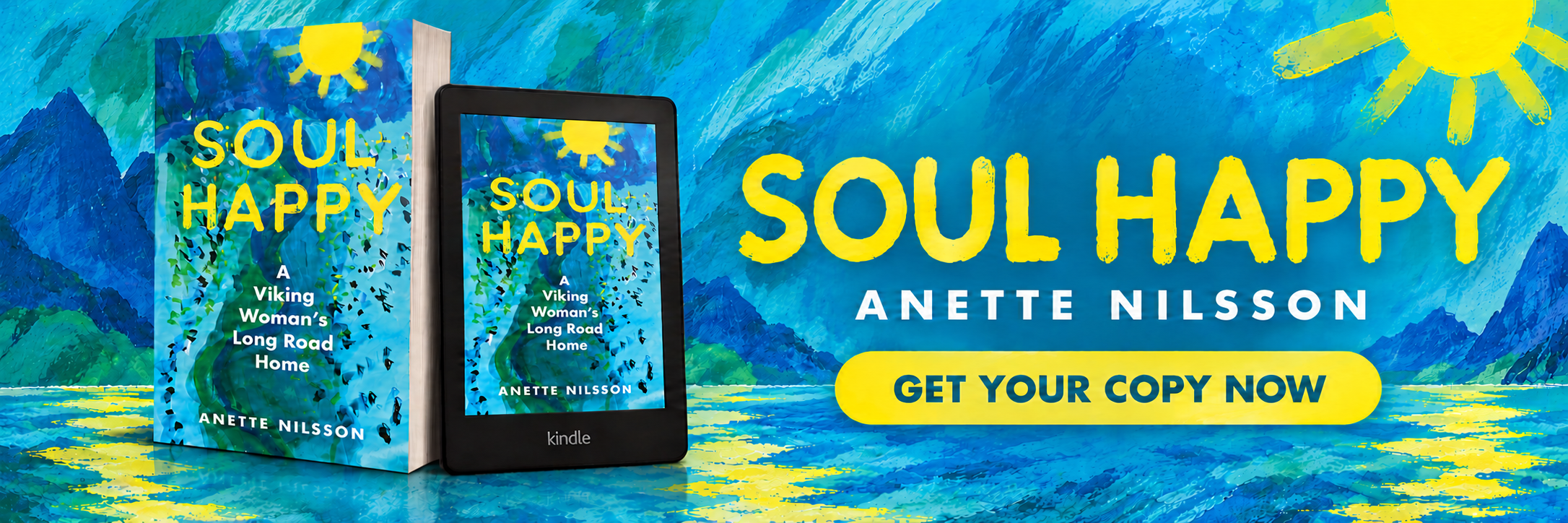
Read Soul-Happy: A Viking Woman’s Long Road Home
If you’d like to read the full story: