We have all been there. Sitting in a clinical, white room, waiting for a specialist whose decades of credentials have quietly granted them absolute authority over our future. They look at a printout, glance up, and deliver a verdict that feels like a heavy mallet crashing down on your life.
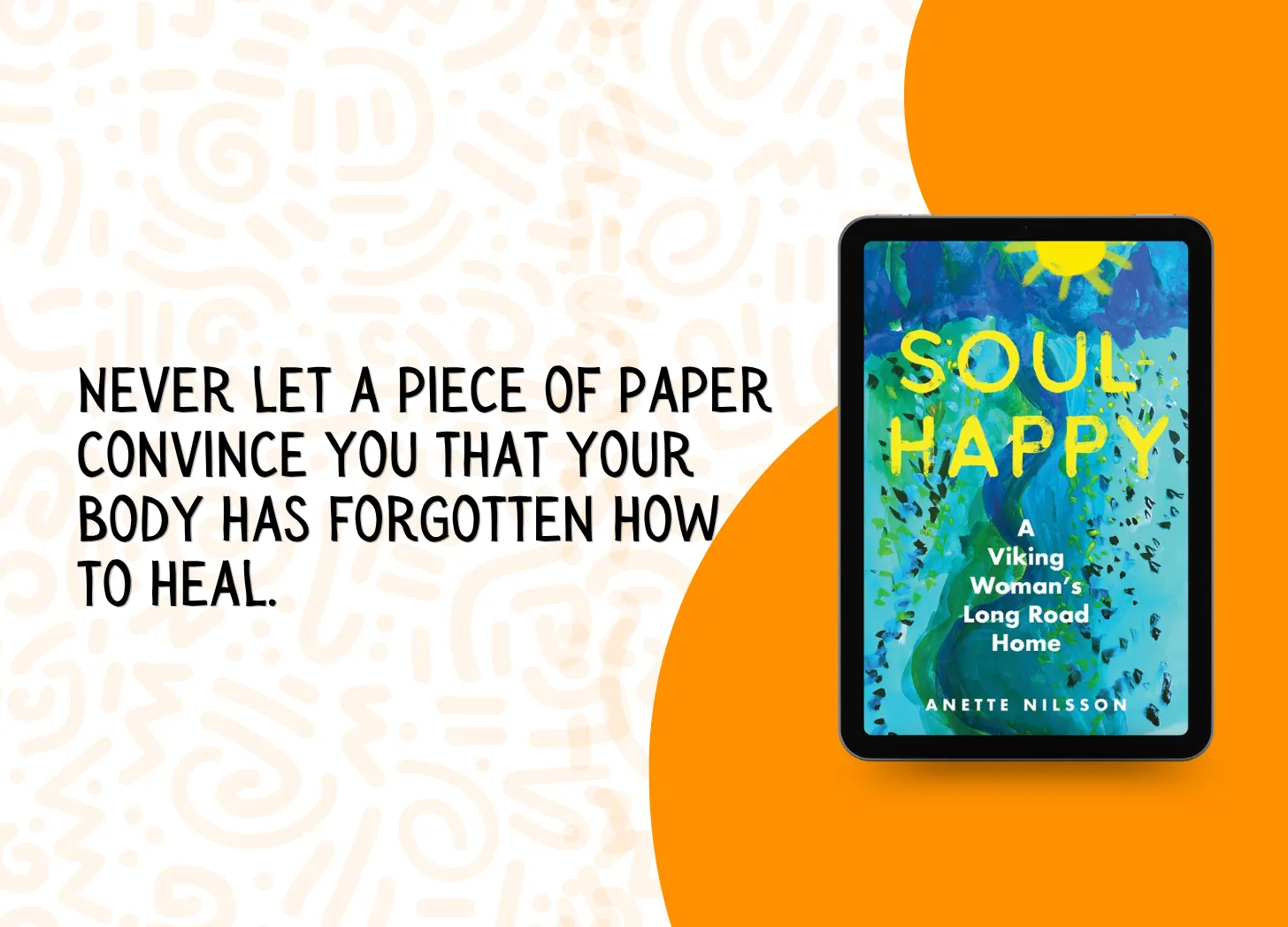
I am incredibly honored that Sanctuary Magazine recently featured Chapter 29 of my memoir, Soul-Happy, which revisits the exact afternoon I had to decide whether to let a medical chart dictate the rest of my days.
I was recovering from a life-threatening physical condition that had left my lower right leg atrophied, numb, and dependent on a rigid plastic AFO brace to move forward. The specialty physician pored over a printout of complicated tricolor curves generated by electrodes attached to my foot. His judgment was flat and certain: the nerves were too damaged for repair. No improvement is to be expected. It takes true mettle to look past that kind of institutional finality. The striking sound of his verdict echoed in my mind for days. But medical training, for all its immense value, often views the body as a purely biological machine—a collection of broken parts to be managed, rather than an energetic entity capable of massive, unpredictable healing.
What the graphs and tricolor curves miss entirely is that the body expresses our experiences, our psychological stresses, and our hidden trauma. A printout can measure a stalled nerve, but it can never map the power of a person willing themselves back to life.
Thankfully, my healing didn’t end in that cold office. It continued in a physical therapy space with a practitioner named Danny, who didn’t look at printouts. He trusted the human body and its innate intelligence.
Where the specialist saw an absolute boundary, Danny saw a starting point. “You’re not even off first base yet,” he told me. “Let your body heal. When you heal, it heals.”
The day after my prognosis, despite what the chart said, I put on two-pound ankle weights for the first time. I went back to my energy medicine practitioner to release the trapped emotional burdens in my leg. I decided that the plastic brace would eventually be gone—not because the data agreed, but because I trusted my body’s capacity to return to balance.
We need a medical paradigm that leaves room for hope—one that nourishes our innate drive to heal rather than flattening it into a prognosis. Never let a piece of paper convince you that your body has forgotten how to mend. Listen to it. Trust it. It knows the way home.
You can read the Featured Excerpt: Sanctuary Magazine | Soul-Happy Feature
Order Your Copy of Soul-Happy: